
 CN
 EN
When selecting temperature‑control products for industrial heating systems, many users tend to only compare technical parameters and prices, while ignoring long‑term operating stability. Most conventional power regulators perform well in the early‑stage production. Nevertheless, after half a year or one‑year operation, various problems may occur successively, including temperature fluctuation, random alarm, false over‑current protection and degraded load‑carrying capacity. These issues will further result in production‑line shutdown, increased defective‑product rate and higher maintenance costs.
With more than ten‑year experience in R&D and supporting services for industrial temperature control, Sichuan Maxwell Electric Co., Ltd. and its brand MSWER adhere to a consistent product philosophy: an industrial power regulator is not a short‑term consumable, but a core unit for temperature and power regulation of the whole heating production line. Targeting complex industrial working conditions, MSWER devotes itself to developing high‑stability industrial power regulators. Instead of cutting costs blindly or piling excessive functions, it takes working‑condition adaptability, long‑term stability and low failure rate as core product standards.
Many customers may wonder: for power regulators with identical specifications and functions, why does MSWER Maxwell Electric attach great importance to stability improvement? Combined with more than ten‑years’ on‑site supporting experience, this article analyzes the industrial value and underlying logic of high‑stability power regulators from the perspective of real‑world industrial working conditions.
Understand Industrial Scenarios: Why Ordinary Power Regulators Struggle in Harsh Working Conditions
Most power regulators can reach standard parameters under laboratory conditions. However, real‑world industrial sites are full of uncertainties: grid voltage fluctuation on workshops, harmonic interference caused by multiple parallel‑connected devices, dusty and humid environment, 24‑hour continuous full‑load operation, frequent resistance variation of loads under cold‑hot switching cycles.
Many low‑cost models are designed for standard working conditions, with insufficient hardware margin and simple anti‑interference design, and their algorithms only fit limited scenarios. Under long‑term impacts of complex working conditions, they are prone to premature aging of power modules, sampling drift and false triggering of protection logic. For continuous‑production industries such as thermal treatment, drying & curing, sintering and coating, losses caused by production halt and material scrap due to abnormal equipment far exceed the price gap of equipment procurement.
That is why Sichuan Maxwell Electric Co., Ltd. (Brand MSWER) keeps focusing on high‑stability power regulators. What industrial users really need is not prototypes with attractive parameters, but practical equipment that can withstand long‑term working conditions with low failure rate and less maintenance work.
Core Logic for MSWER Maxwell Electric to Build High‑stability Power Regulators
High stability is not a marketing concept, but systematic accumulation covering material selection, structural design, algorithm development, product testing and field adaption. Drawing on abundant industrial temperature‑control project experience, Sichuan Maxwell Electric Co., Ltd. optimizes products targeting field‑based pain points and forms exclusive stability standards for MSWER.
3.1 Reserve hardware margin to adapt to long‑term continuous operation
For 24‑hour non‑stop industrial production scenarios, MSWER industrial power regulators reserve reasonable working‑condition margin on core power components, sampling chips, heat‑dissipation modules and wiring structures. Different from schemes merely meeting minimum standards, MSWER models adopt component margin configuration to mitigate component attenuation induced by long‑time high‑temperature and full‑load operation, and reduce risks of later‑stage drift and failure. Meanwhile, optimized EMC design is adopted to cope with grid interference generated by frequency converters and motor start‑stop in workshops, and lower abnormal equipment risks triggered by external environment.
3.2 Iterate algorithms continuously for real‑world heating working conditions
General‑purpose power regulators have limited algorithm adaptability. When facing diverse loads such as graphite, silicon‑carbon rods, inductive transformers and ordinary resistors, problems including delayed temperature control, oscillation and excessive inrush current may happen. Based on massive on‑site commissioning data, MSWER Maxwell Electric keeps iterating PID temperature‑control algorithm, soft‑start inrush‑current suppression, smooth power output and harmonic adaptation logic.
Self‑developed control programs of the brand can adaptively adjust output rhythm according to different load characteristics. It can not only avoid inrush current at cold‑state startup, but also guarantee temperature consistency during long‑term constant‑temperature operation, and is applicable to various scenarios such as industrial furnaces, ovens, injection‑molding heating and vacuum coating.
3.3 Full‑range factory aging test to eliminate hidden risks in advance
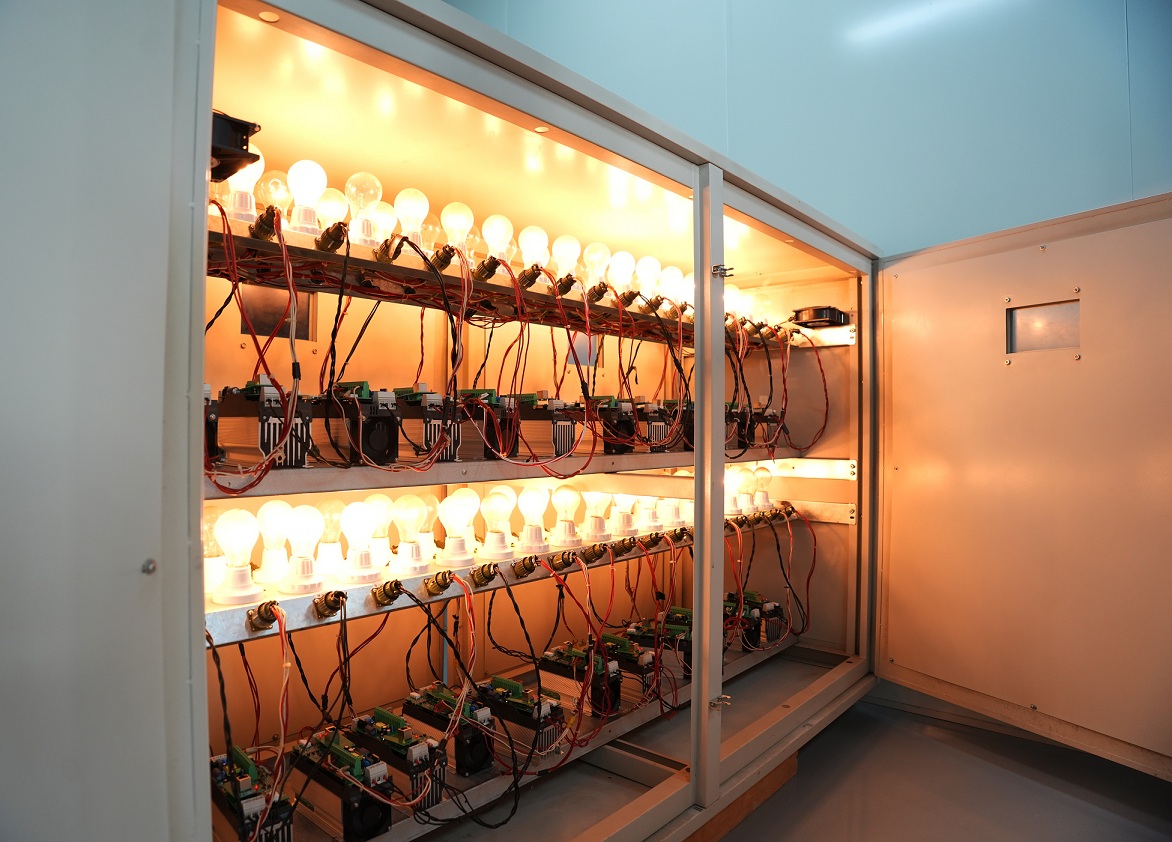
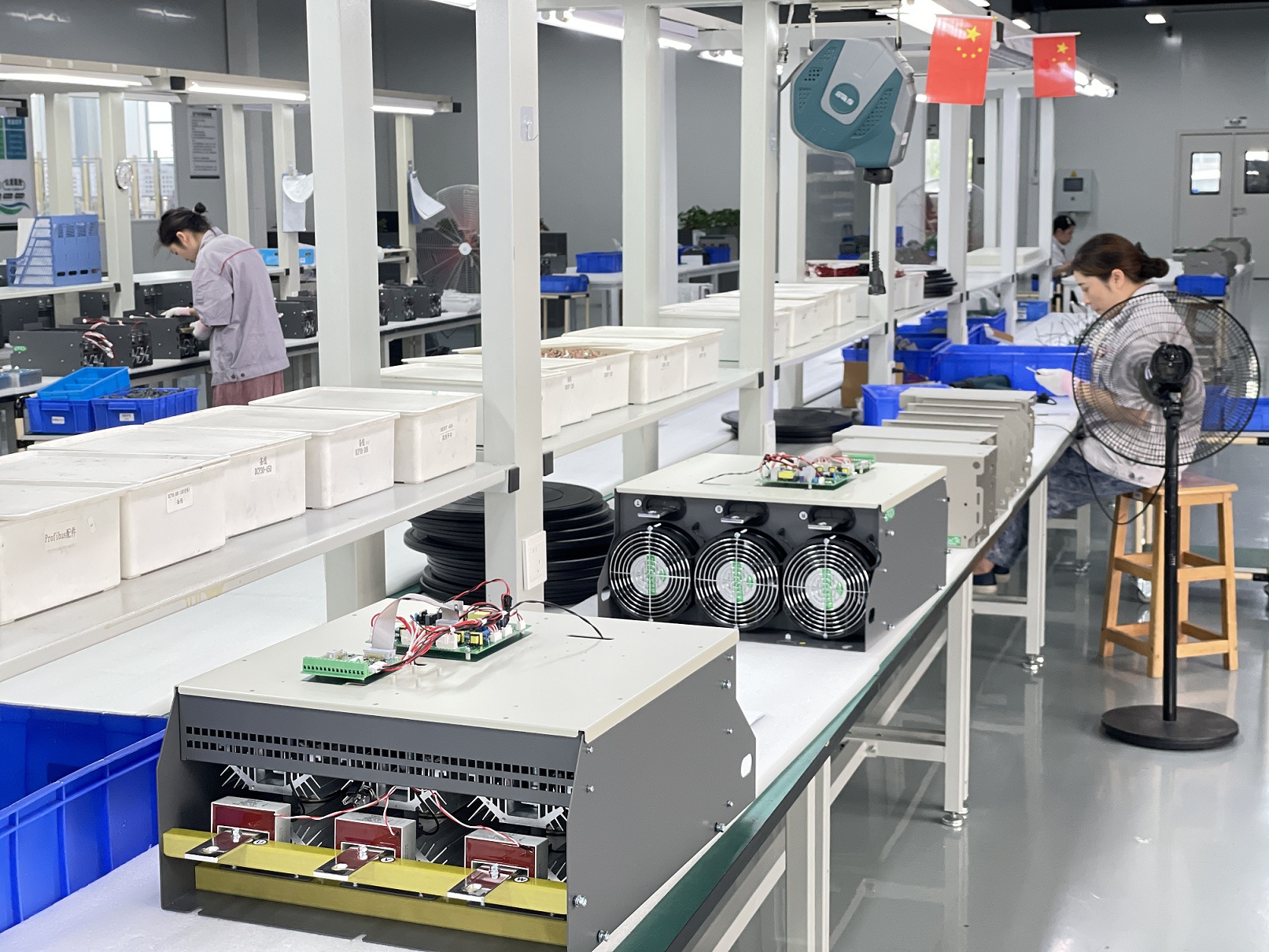
Before delivery, all MSWER industrial power regulators go through multi‑scenario simulation tests: long‑time full‑load aging test, high‑low‑voltage fluctuation test, frequent start‑stop test, distorted waveform adaptation test and so on. By simulating harsh industrial working conditions, potential performance defects can be screened out in advance. It ensures every device delivered to customers can cope with complex production environments and greatly reduce on‑site failure probability.
3.4 Scenario‑oriented type‑selection instead of one‑size‑fits‑all matching
Sichuan Maxwell Electric Co., Ltd. avoids generalized universal models. Instead, it provides scenario‑oriented type‑selection and parameter adaptation according to customers’ load types, operation duration, control modes and process‑accuracy requirements. Corresponding solutions are available for intermittent short‑cycle working conditions, conventional drying working conditions, high‑precision sintering working conditions and special‑load working conditions with high inrush current, so as to match stability with practical production demands.
Practical benefits brought by stable MSWER power regulators for factories
In industrial production, benefits brought by equipment stability are long‑term and intuitive, which is also the key reason why many long‑term customers keep choosing MSWER Maxwell Electric.
- Stable production rhythm: Reduce false alarms, tripping and temperature‑control drift of power regulators, cut down unplanned shutdown frequency and guarantee continuous production of production lines.
- Stable process quality: Small long‑term temperature fluctuation and uniform power output effectively relieve process defects such as product shrinkage, bubbles, scorching and color difference, and stabilize qualified‑product rate.
- Lower comprehensive operation‑maintenance cost: Slow down aging speed of equipment and heating coils, reduce frequency of repair and replacement, and greatly cut later‑stage operation‑maintenance and spare‑part procurement expenditure.
- Adapt to complex factory environments: Strong anti‑interference capability enables it to adapt to ordinary factory workshops with unstable power grid, dust and humidity, and delivers higher fault tolerance.
Industry insight: Stability prevails over low price and function stacking
At present, competition in temperature‑control‑equipment market is fierce. Many products attract users with low prices and stacked functions. Nevertheless, according to years of practical projects, continuity and reliability are more valued in industrial production. Many low‑cost models require low upfront investment, yet they suffer from frequent failures, unstable processes and heavy shutdown‑related losses, resulting in higher comprehensive usage cost.
Sichuan Maxwell Electric Co., Ltd. (MSWER) adheres to pragmatic product positioning. It avoids blind low‑price competition and useless‑function stacking, and focuses on solid core performance of industrial power regulators: working‑condition stability, temperature‑control consistency and long‑term durability. For regular auxiliary working positions with limited budgets, standard adapted models are provided. For core precision‑production positions, upgraded high‑stability models are available to balance cost‑performance and practicality.
Conclusion
Stable equipment serves as the cornerstone for long‑term development of industrial temperature‑control industry. With over ten‑year industrial expertise, Sichuan Maxwell Electric Co., Ltd. leverages technical accumulation of MSWER, strict quality control and scenario‑oriented adaptability. It keeps focusing on R&D and manufacturing of high‑stability industrial power regulators. With sufficient hardware margin, mature control algorithms, strict factory tests and customized working‑condition adaptation, it addresses pain points including temperature‑control drift, vulnerable equipment and unstable production for various industrial heating production lines.
In the future, Maxwell Electric will keep concentrating on the industrial temperature‑control track, continuously optimize stability performance of power regulators. With products and services matching real‑world industrial scenarios, it will help more manufacturing enterprises realize quality improvement, maintenance‑cost reduction and production‑line efficiency promotion.


 Online
 Tel