
 CN
 EN
In industrial electrochemistry, metal surface treatment, electrolytic heating, wastewater treatment and other scenarios, rectifier power supplies serve as core power feeding equipment. Their operating efficiency, output precision and grid adaptability directly affect product quality and overall workshop energy consumption. Many old production lines still adopt traditional thyristor rectifiers. After years of operation, these devices gradually show drawbacks such as relatively high energy consumption, large waveform fluctuation, low power factor and unstable temperature control.
With the advancement of industrial energy-saving renovation and precision process upgrading, high-frequency IGBT rectifier power supplies have become a popular option for new project matching and old equipment replacement. Many engineers and procurement staff often wonder during the selection phase: compared with traditional thyristor rectifiers, what specific upgrades does an IGBT rectifier power supply bring? Where are the differences in working condition adaptation?
From the perspective of on-site industrial application, this article horizontally compares the structural differences and operating performance of the two types of rectifiers, objectively analyzes the core strengths of IGBT rectifier power supplies, and provides practical references for enterprises on power supply selection and energy-saving technical transformation.
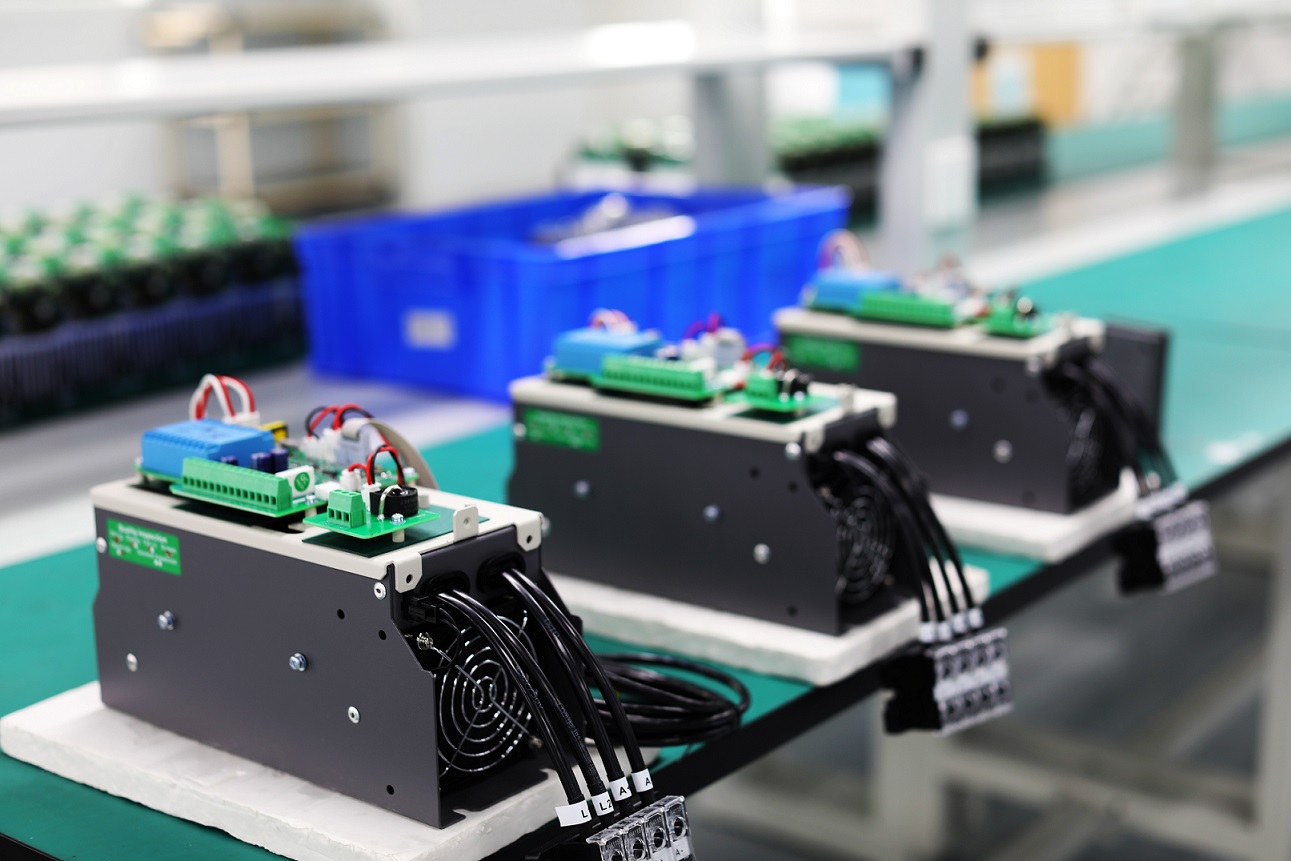
1. Basic Working Principle and Structural Differences
To understand the upgrade advantages, it is necessary to clarify the underlying structural differences between the two types of rectifiers, which are the root cause of performance gaps.
1.1 Features of Traditional Thyristor Rectifier Power Supply
The traditional thyristor rectifier adopts power-frequency phase-controlled rectification. It relies on thyristor phase triggering to conduct and converts voltage and current at the 50Hz power frequency. Featuring simple structure, mature technology and low procurement cost, it was widely applied in various industrial rectification scenarios in the early stage.
Restricted by the power-frequency operating mechanism, thyristor rectifiers have relatively slow adjustment response and large ripple coefficient of output waveforms. Reactive power loss tends to occur during operation, imposing certain impact on the power grid quality of the factory. It is more suitable for working conditions with ordinary process precision requirements and basic needs of old production lines.
1.2 Features of High-Frequency IGBT Rectifier Power Supply
The IGBT rectifier power supply adopts a high-frequency switching topology. IGBT power devices act as core switching components, working at a frequency much higher than power-frequency thyristor equipment. Smooth voltage and current output is realized through high-frequency chopping and closed-loop precise regulation. The overall circuit enjoys higher integration and more refined control logic, making it a new rectification solution for modern precision industrial production and energy-saving transformation.
2. Core Advantages of IGBT Rectifier Power Supply Reflected in Industrial Sites
Based on many cases of new installation and replacement transformation on production lines, IGBT rectifier power supplies show obvious optimization effects in energy consumption, process performance, stability, operation and maintenance compared with traditional thyristor rectifiers, meeting the demands of mid-to-high-end precision production and energy conservation.
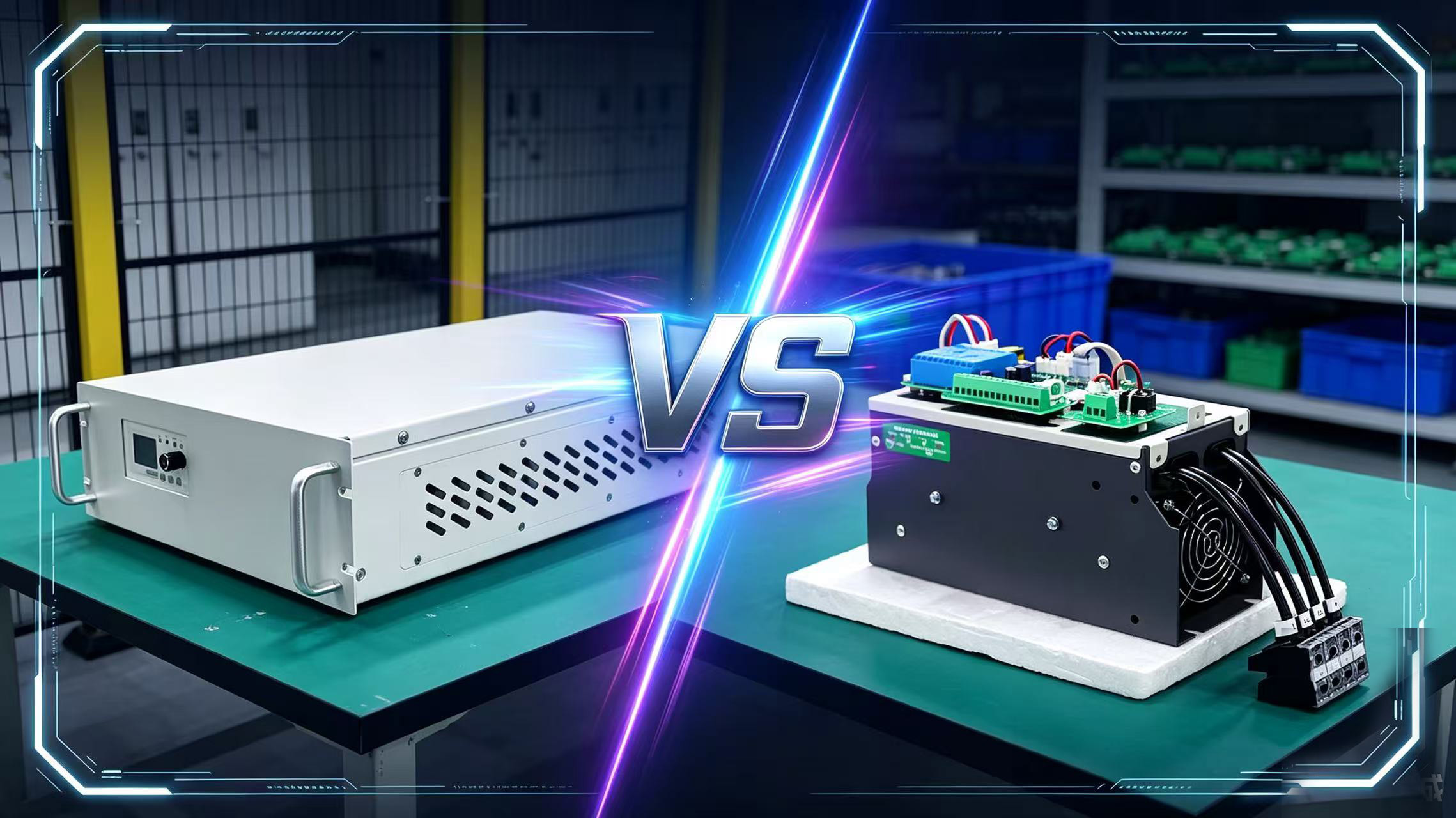
2.1 Good Energy-saving Performance and High Power Factor
In the voltage regulation process of traditional thyristor phase-controlled rectifiers, phase lag easily occurs, leading to large reactive power loss and generally low overall power factor. A considerable amount of electric energy is wasted on the workshop power grid.
High-frequency IGBT rectifier power supplies support active power factor correction, greatly reducing reactive power loss during operation. The overall power factor can be maintained at a high level, cutting line loss and transformer load. For mass production with 24-hour continuous operation, stable power-saving benefits can be achieved, matching factories’ demands for energy conservation and cost reduction.
2.2 Low Output Ripple and Stable Process Precision
Precision processes such as electroplating, hard anodizing and electrolytic purification impose strict requirements on the smoothness of current and voltage. Traditional thyristor rectifiers have large waveform fluctuation and high ripple, which may cause uneven coating thickness, inconsistent oxide layer texture and unstable product yield.
IGBT rectifiers rely on high-frequency fine regulation to deliver smoother current and voltage waveforms with well-controlled ripple coefficients. It ensures consistent processing quality of workpieces, improves finished product appearance and process precision, and fits precision surface treatment production lines.
2.3 Fast Dynamic Response and Strong Load Adaptability
Industrial production involves frequent start-stop and slight load fluctuation. Traditional power-frequency thyristor rectifiers suffer from response lag and limited adjustment precision. When the load changes, voltage and current oscillation and slow recovery may occur.
The closed-loop regulation speed of IGBT rectifier power supplies is faster. It can fine-tune output parameters in real time following load changes, dynamically adapt to fluctuating working conditions, reduce product defects caused by process fluctuation, and keep the whole production line in a stable state.
2.4 Compact Equipment Size and High Integration
Power-frequency thyristor rectifiers need to be equipped with large power-frequency transformers and filter components, resulting in bulky equipment, large floor space and low flexibility in wiring and equipment layout.
High-frequency IGBT rectifiers do not require large power-frequency transformers. Featuring high integration and compact structure, they occupy less space. It facilitates workshop layout optimization and production line upgrading, suiting the construction requirements of modern standardized workshops.
2.5 Excellent Temperature Rise Control and Good Long-term Operation Stability
Traditional thyristor rectifiers generate concentrated heat due to high operating loss. Continuous full-load operation for a long time may lead to excessive temperature rise, accelerated device aging and relatively high failure rate in later stages.
IGBT rectifier power supplies have low operating loss and uniform heat generation. Combined with a complete heat dissipation structure, they show good temperature rise performance. Suitable for non-stop 24-hour industrial operation, they help reduce equipment shutdown and maintenance frequency.
2.6 Better Grid Compatibility and Lower Harmonic Interference
Thyristor phase-controlled rectifiers tend to produce power grid harmonics, interfering with the normal operation of precision electronic control equipment and instruments in the factory area. Extra harmonic filtering equipment may be required under some working conditions, raising transformation costs.
High-frequency IGBT rectifiers achieve better harmonic suppression and have slight impact on the factory power grid. The investment in supporting filter equipment can be reduced to guarantee stable operation of the whole electrical system in the workshop.
3. Comparison Table: IGBT Rectifier vs Thyristor Rectifier
表格
| Comparison Item | Traditional Thyristor Rectifier Power Supply | High-Frequency IGBT Rectifier Power Supply |
|---|---|---|
| Operating Frequency | 50Hz power frequency, slow response | High-frequency switching, fast dynamic response |
| Output Ripple | High ripple, average waveform smoothness | Low ripple, stable and uniform waveform |
| Power Factor | Relatively low, high reactive loss | High, high electric energy utilization |
| Equipment Size | Large, bulky, large footprint | Compact structure, high integration, small footprint |
| Process Adaptability | Suitable for mass production with ordinary precision | Suitable for high-precision, high-quality production |
| Operation & Maintenance Cost | High loss, severe heat generation, frequent maintenance | Stable operation, low loss, low maintenance pressure |
4. Working Condition Selection Suggestions: Application Scenarios for the Two Rectifiers
There is no absolute superiority or inferiority between the two rectification solutions. The core lies in matching working conditions. Enterprises can select equipment according to production process, budget and technical transformation demands.
4.1 Scenarios Suitable for Traditional Thyristor Rectifiers
Traditional thyristor rectifiers are suitable for rough electrolysis, conventional wastewater treatment, intermittent operation and production lines with limited budget and low process precision requirements. With mature technology and low procurement cost, they can fully meet basic production needs.
4.2 Scenarios Suitable for IGBT Rectifier Power Supplies
IGBT high-frequency rectifier power supplies are preferred for precision electroplating, high-end anodizing, precious metal electrolysis, precision heat treatment, 24-hour continuous mass production, projects with high power grid quality requirements and production lines in need of energy saving and quality improvement. It can stabilize product quality and reduce long-term power consumption and equipment maintenance costs of the workshop.
Conclusion
Compared with the traditional power-frequency thyristor rectification scheme, high-frequency IGBT rectifier power supplies have obvious upgrading advantages in energy utilization, output precision, waveform stability, dynamic response, grid adaptability, equipment size and operation & maintenance cost. It has become a mainstream direction for modern precision industrial production and energy-saving technical transformation.
Traditional thyristor rectifiers still fit basic, low-precision and intermittent production scenarios, while IGBT rectifiers are more suitable for modern industrial production featuring high quality, low energy consumption and high stability. When carrying out power supply transformation and new project matching, enterprises can realize dual optimization of quality improvement and energy consumption control by selecting equipment reasonably based on process precision, operating duration and energy-saving goals.


 Online
 Tel